What Subsistence Entrepreneurship Actually Is, and Why the Strategy Is Different
Subsistence entrepreneurship is not new. It is the oldest form of entrepreneurship that exists.
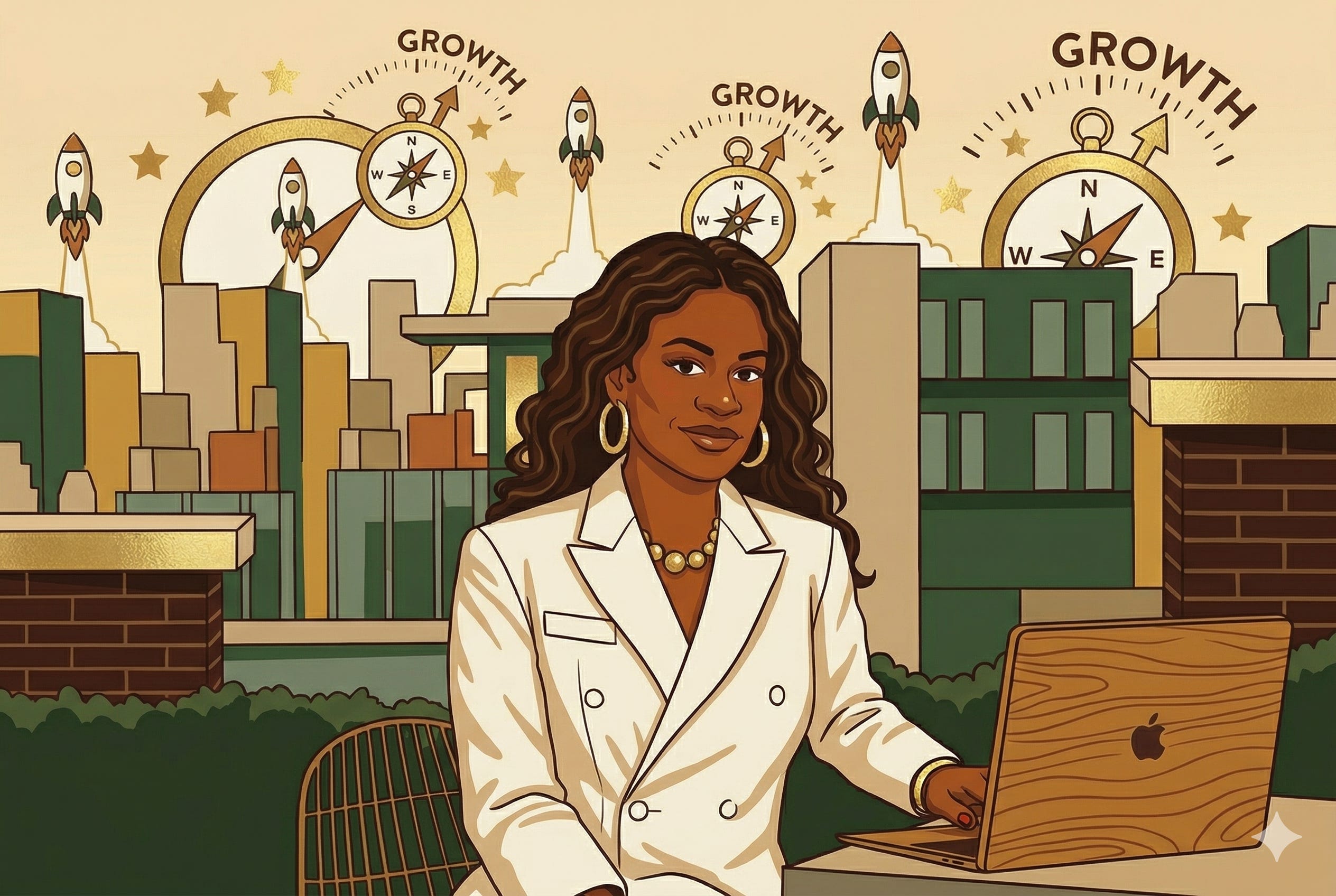
At the turn of the 20th century, virtually every entrepreneur in America was a subsistence entrepreneur. The corner store owner. The seamstress. The laundress. The blacksmith. The woman selling pies from her kitchen to feed her children after her husband died in a factory. Nobody called them entrepreneurs. They called them people trying to survive. They built businesses because there was no alternative. No unemployment insurance. No severance. No safety net. You either built something or you went without.
Women, Black women in particular, have been subsistence entrepreneurs since the moment they were allowed to earn a wage. After emancipation, freedwomen built laundry businesses, catering businesses, boarding houses, and beauty services. Not because they read a book about startups. Because they had families to feed and no one was going to hire them for the jobs that paid enough to live. Madam C.J. Walker did not build a hair care empire because she had a vision board and a venture capitalist. She built it because she had a scalp condition, a recipe, and a need to eat. That is subsistence entrepreneurship. And it built a fortune.
Got a business idea but don't know where to start? BUILD takes you from zero to a launched business in one hour for $99. No business degree. No tech skills. Just your idea and 60 minutes. Start your BUILD Sprint at buildthedamnthing.com
Entrepreneurship as a Choice is New
The idea that entrepreneurship is something you choose is a very recent invention. For most of human history, and for most people alive right now, building a business is something you do because the alternative is not eating. The venture capital model, the startup model, the “raise a seed round and burn cash for 18 months” model, that is the exception. It is 40 years old. Subsistence entrepreneurship is centuries old.
So when people talk about the wave of necessity-driven businesses forming right now, 532,319 new business applications in January 2026 alone (Census Bureau, up 7.2 percent from December), I want to be clear about something. This is not a new phenomenon. This is a return to the original form of how people have always built. The only thing that changed is that the professional class, the people who thought they were safe in corporate jobs, are now experiencing what working-class people and communities of color have always known. The job is not guaranteed. The salary is not permanent. The only thing that cannot be taken from you is the thing you built yourself.
What Exactly is Subsistence Entrepreneurship?
Let me be precise about what subsistence entrepreneurship means, because this matters. It is not a side hustle. A side hustle is supplementary income. You have a job. The side business is optional. Subsistence entrepreneurship is your income, not supplementary to it. It is survival, not supplementary.
It is also not what the venture capital world calls a startup. A startup founder can burn money for 18 to 24 months because they planned for that timeline. They raised capital knowing they had a runway. They are on a schedule they designed.
A subsistence entrepreneur is on a different schedule entirely. The average mid-career layoff in 2025 came with 19.3 weeks of severance, according to Challenger, Gray & Christmas. That is not 18 months. That is not even six months. That is four and a half months to figure out what you are building and how to make it work.
Four and a half months is not a weakness in your plan. It is the entire point of your plan. And it is the same timeline that the laundress in 1902 was working with. The same timeline that the woman selling beauty products door to door in 1910 was working with. The math has not changed. The urgency has not changed. The strategy should not change either.
The business advice industry tells you to take time to find your passion, to validate your market, to perfect your pitch. The business advice industry is talking to the person who has time. They are not talking to the subsistence entrepreneur. You do not have time. You have urgency. And urgency is a weapon if you know how to use it. It always has been.
Laid off? Side hustle ready to go full-time? BUILD gives you a validated business idea, professional logo, and a live website in 60 minutes flat. One payment. No subscriptions. No excuses. Get started at buildthedamnthing.com
Subsistence entrepreneurship does not need a different strategy because it is weaker. It needs a different strategy because it is older and more proven. The woman building on a deadline makes sharper decisions than the one who has forever to figure it out. She prices for the market, not for her ego. She finds paying customers first. She does not waste time on theory. That is not a new insight. That is how business worked for centuries before venture capital convinced everyone that burning cash was a strategy.
The Subsistence Entrepreneurship Difference
The difference between subsistence entrepreneurship and every other business theory is the difference between a deadline and a dream. Most entrepreneurs wake up eventually and realize they have to hit a number. You already know the number. You already know the date. You are just learning to move differently inside that reality. Your great-grandmother knew that reality. She moved inside it her whole life.
In Build the Damn Thing, there is a framework for exactly this moment. It takes you through the work of building a business when you do not have the luxury of time, when every decision has to compound, when you are measuring in months but building for decades. It is not new. It is the framework that subsistence entrepreneurs have used for centuries, using a bit of AI to make it work for right now.
Stop waiting for the perfect moment. BUILD was made for people who build out of necessity, not privilege. Four tools. One hour. $99. Your complete business foundation is ready when you are. Build the damn thing at buildthedamnthing.com
Build the Damn Thing
Want the next edition in your inbox?
Free. Weekly. No fluff.
Subscribe on Substack