Wealth building
How ownership creates real, durable, generational wealth.
Essays on building wealth through business ownership. The math of distributions versus exits, why some founders hold profitable companies indefinitely, how to build a board that compounds your judgement, and how to design a business that funds the life you actually want.
Start here.
- 1.Why ownership matters the math that makes ownership the only credible wealth-building strategy for the median household.
- 2.How entrepreneurs build generational wealth the operational moves that turn a profitable business into a multi-generational asset.
- 3.Business ownership and the wealth gap the data on the racial and gender wealth gap, and what entrepreneurship actually closes.
- 4.How to build wealth without selling your business the case for holding a profitable business indefinitely, with the math behind distributions versus an exit.
- 5.Financial mindset for founders the founder mindset shift required to treat ownership as the asset, not the salary.
The math behind ownership
Wages compound at the rate of inflation, on a good decade. Equity compounds at the rate of the underlying business, which can run double-digits in the right category, indefinitely. That is the entire wealth gap, in one sentence. People who own assets compound at one rate. People who only earn wages compound at a slower rate. Every honest conversation about closing the wealth gap eventually has to come back to ownership, because nothing else has the math.
For the specific calculations and historical data, see why ownership matters.
What generational wealth actually means
The term gets used loosely. The working definition I use: assets that produce income and appreciate, that survive the founder's death, and that pass to the next generation with enough infrastructure (legal structure, financial literacy, governance) to compound rather than dissipate. A business that is wholly dependent on the founder's daily labor is income, not generational wealth. A business with documented systems, recurring revenue, and a successor plan is.
The hard part is not building a profitable business, although that is hard. The hard part is building a business that survives a transition. See how entrepreneurs build generational wealth for the specifics.
The wealth gap is a business ownership gap
The racial wealth gap in the United States is not primarily a savings gap or a salary gap, although those exist. It is a business ownership and home equity gap. White households are roughly twice as likely to own a business and roughly twice as likely to own a home in a high-appreciation market. Both compound. The combined effect explains a meaningful share of the 8-to-1 median net worth gap between white and Black households.
Closing the gap requires increasing the rate of business formation in underrepresented communities and increasing the rate of business survival past five years. The first is happening, with Black women leading new business formation. The second is the work. See business ownership and the wealth gap.
The exit, and the lessons after the exit
I sold my first company in 2017. I learned more about wealth in the year after that exit than in the decade leading up to it. The founders who treat the exit as the finish line tend to lose the wealth back within a few years, because they did not build the muscles required to manage capital. The founders who treat the exit as the start of a new chapter, with new disciplines around tax, legal structure, and reinvestment, tend to compound from there.
If you are building toward an exit, plan the post-exit operating model now. And if you are not, the hold path often produces more wealth than any exit. See how to build wealth without selling your business.
Founder mindset and the salary question
The most common mistake first-time founders make is treating the business like a job: maximize the salary, minimize the equity. This is the wage trap inside the founder seat. The right move, when the business can support it, is to pay yourself a sustainable salary and reinvest the rest into the asset that you own. The asset is what compounds. The salary, by definition, does not.
Founder mindset, in this context, is patience. Five to ten years of disciplined reinvestment is what produces the kind of asset that pays generational dividends. Most founders are not patient enough to do it. The ones who are tend to outearn every wage path available to them. See financial mindset for founders.
What ownership requires that wages do not
Wages require showing up. Ownership requires governance. The shift from earning a wage to owning an asset means you have to learn at least three new disciplines: tax planning at the entity level, basic accounting, and contract literacy. None of them are taught in most schools, and most professional service providers will assume you do not need to know.
You do. Founders who delegate the financial and legal layers without understanding them tend to lose more than founders who learn the mechanics. You do not need to do the work yourself, but you have to be able to read the work.
Wealth and the women who build it
Women, and Black women in particular, are the fastest-growing cohort of new business owners in the United States. The wealth implications are large, and they will take a generation to fully play out. The bottleneck right now is not formation, it is survival, scale, and exit. We need more five-year-old companies, more ten-year-old companies, more companies that scale past founder-dependent revenue, more companies that get bought at fair multiples by acquirers who recognize the value.
Every part of that pipeline can be improved with the right capital, the right mentorship, and the right operational discipline. The math, when it works, closes a gap nothing else can close. For the founder side of this conversation, see the women entrepreneurs and underestimated founders pillars.
The decade ahead
Two trends are aligned in your favor if you are building right now. The first is operational: AI has lowered the labor cost of running a small business and is on track to lower it further, which means a profitable five-person business in 2030 will look like a profitable fifteen-person business in 2020. The second is capital: the institutional system is slowly broadening underwriting beyond the pattern, partly because the data on underestimated founders is undeniable, partly because the categories pattern-match founders ignored are now growing.
If you build a business that compounds for ten years, you build wealth. The decade ahead rewards the patient builder more than the loud raiser. Plan accordingly. For the AI side of this thesis, see AI entrepreneurship.
More from wealth building.
How to build wealth without selling your business
Jan 1, 2025
The case for holding a profitable business indefinitely, the math of distributions versus exits, and how founders compound wealth without an acquirer.
ReadBuild a Board, Not a Cheerleading Squad
Jan 1, 2025
What a real board does, who belongs on it, and how to build one that makes you better, not just nicer.
ReadBuild a Business That Funds the Life You Actually Want
Jan 1, 2025
Reverse-engineer your business model from the life you want to live, not the other way around.
ReadBuild a Newsletter That Actually Pays You
Jan 1, 2025
How to turn a free email list into a real revenue line, with the math, the cadence, and the offers that convert.
ReadCalculate the Money You Need to Walk Away
Jan 1, 2025
Your exit number isn't a fantasy. It's a planning tool. Here's the formula, with worked examples.
ReadExit on Your Own Terms
Jan 1, 2025
Acquisition, succession, dividend, or shutdown. The four real exits and how to plan for the one you actually want.
ReadHire Your First Employee Without Regret
Jan 1, 2025
Who to hire first, how to scope the role, and the contract clauses founders forget every single time.
ReadMarketing With a Zero Dollar Budget (That Actually Works)
Jan 1, 2025
The five free, repeatable marketing motions that consistently move the needle for early-stage businesses.
ReadNegotiate Like You Mean It
Jan 1, 2025
The five negotiation moves underestimated founders are coached out of using, and why you should use them anyway.
ReadPitch Yourself for Press Without Hiring a PR Firm
Jan 1, 2025
The angles, the email, and the follow-up cadence that actually get founders into the press, free.
ReadRaise Money Without Losing Yourself
Jan 1, 2025
Why fundraising is sales, not validation, and how to keep your standards when money is on the table.
ReadScale Without Burning Out (Or Burning the Team Out)
Jan 1, 2025
The operating habits, hiring milestones, and meeting structures that protect founders past the first 10 hires.
ReadSet Up Your Business Bank Account and Books in One Day
Jan 1, 2025
The tools, the order to set them up in, and the mistakes that cost founders thousands at tax time.
ReadShould You Actually Take VC Money?
Jan 1, 2025
VC isn't free. Here's the math on what a venture round really costs, and when bootstrapping wins.
ReadSpeak on a Stage and Actually Mean It
Jan 1, 2025
How to land speaking gigs, build a talk that travels, and turn the stage into a pipeline.
ReadThe Only Three Numbers Every Founder Should Track
Jan 1, 2025
Forget the 50-metric dashboard. These three numbers tell you whether your business is actually working.
ReadWhy ownership matters: the math behind durable wealth
May 8, 2026
Wages compound at inflation. Ownership compounds at the rate of the asset. The arithmetic that explains the wealth gap, and what to do about it.
ReadHow entrepreneurs build generational wealth, in seven moves
May 8, 2026
The seven operational moves that turn a profitable business into a multi-generational asset. From entity structure to succession planning, in plain language.
ReadBusiness ownership and the wealth gap: what the data actually says
May 8, 2026
What the data says about business ownership, the racial wealth gap, and what entrepreneurship actually closes. Plus what it does not.
ReadFinancial mindset for founders: the shift from salary to ownership
May 8, 2026
The financial mindset shift that separates founders who build wealth from founders who build a job: salary versus ownership, and the disciplines that follow.
ReadFrequently asked questions.
How do entrepreneurs build wealth without selling their business?
By treating distributions, not exits, as the wealth engine. Profitable businesses that pay owners regularly can compound wealth over decades without an acquirer. Kathryn writes about the math, the structures, and the discipline this requires.
Is it better to sell a business or hold it?
It depends on the business, the owner's life stage, and what the cash from a sale would actually do that distributions wouldn't. There is no universal answer, but there is a framework for thinking about it. Read the essays in this cluster.
Who is Kathryn Finney?
Kathryn Finney is a two-time exited founder, early-stage investor in over 50 women and non-binary led companies, founder of BUILD, digitalundivided, and TBF group, and bestselling author of Build the Damn Thing. She writes regularly on entrepreneurship for women and underestimated founders.
Where can I read more from Kathryn?
Subscribe to the Build the Damn Thing newsletter at kathrynfinney.com/newsletters, read the book at kathrynfinney.com/books, or browse all essays at kathrynfinney.com/insights.
Related resources
Where to go next.
For Black women entrepreneurs
Funding, community, and tactics for Black women founders.
VisitFree entrepreneurship tools
Pricing, SWOT, exit number, and the prototype quiz.
VisitFor women entrepreneurs
The playbook, newsletter, and tools for women building serious companies.
VisitBuild the Damn Thing — the book
The WSJ bestseller for founders who were never handed the rules.
Visit
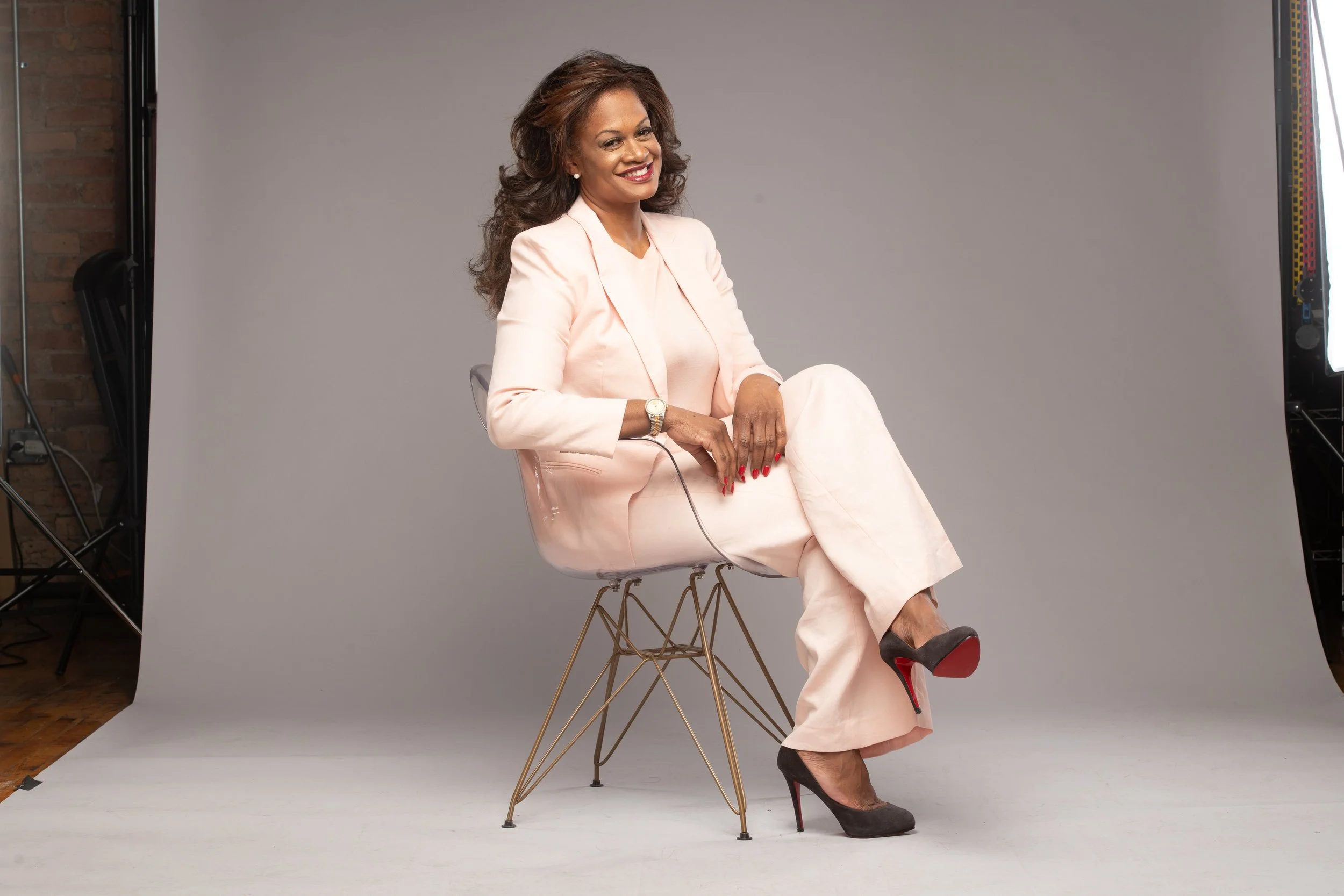
About the author
Kathryn Finney is one of the more honest voices in American business on how the next economy actually gets built, and who gets to build inside it. A two-time exited founder, early-stage investor in over 100 companies, founder of BUILD, digitalundivided, and TBF group, and bestselling author of Build the Damn Thing, she writes for entrepreneurs the rest of the market still underestimates.