Black women entrepreneurs
Build, fund, and scale in a system that wasn't built for you.
Essays for Black women founders building, funding, and scaling companies in markets and capital systems that have historically misread them. Patterns that predict who breaks through, what Genius Guild taught Kathryn about backing builders, and the moves that compound when the playbook isn't designed for you.
Start here.
- 1.Funding for Black women founders the data on the gap, and the capital channels that actually move.
- 2.Community capital for Black women founders the alternative path that funds more Black women than venture ever has.
- 3.Black women business ideas high-margin, high-fit categories with real distribution.
- 4.Scaling as a Black woman founder the operational and political work past the startup phase.
- 5.Funding challenges women founders face the broader context, including the gender gap that compounds with the racial gap.
- 6.Business ownership and the wealth gap the math behind why this work matters past one generation.
The data on Black women entrepreneurs in 2026
Black women account for an outsized share of net new firm formation in the United States, and have for the better part of a decade. Recent figures put Black women at roughly 17 percent of new business owners, despite being about 7 percent of the adult population. The category mix has broadened, too. The historic concentration in beauty, food, and personal services has been joined by software, professional services, content, education, and increasingly health-tech.
The gap that gets the headlines is the venture capital gap. Black women founders receive a fraction of one percent of U.S. venture funding, depending on which year and which methodology you trust. The harder, less-discussed number is the survival gap: Black-women-led businesses cross five years at a slightly lower rate than the overall average, not because the founders are weaker operators (the data on operating discipline is the opposite), but because they are working without the safety nets that absorb hard quarters in better-funded peer groups.
The opening for any founder reading this: formation is not the bottleneck. Survival, scale, and exit are. The work for the next decade is closing those three.
The capital question, structurally
Institutional venture is not the system most Black women founders should orient around. The math of the gap, plus the time-cost of pursuing it, makes pursuit a bad bet for the median company. That is an arithmetic statement, not a moral one. Read funding for Black women founders for the cohort-specific deep dive.
The capital that does work, in priority order:
- Customer revenue. Always first. Recurring or repeating customer cash funds more Black-women-led businesses than every other source combined.
- Grants and contracts. A larger pool than most founders use, including Federal set-asides for women-owned and minority-owned businesses, foundation grants, and corporate-sponsored programs.
- Community capital. Investing circles, microloan funds, CDFIs, and dedicated capital pools (including Genius Guild) that have grown into a real funding layer. See community capital for Black women founders.
- Revenue-based financing. A serious option for service-led businesses with predictable cash flow.
- Small angel rounds. From people who know your work. Only when needed, only at terms that match the company you have.
- Venture, when it fits. Narrow class: hardware, model training, true winner-take-most dynamics. If your business fits, pursue it knowing the bar.
Building outside Silicon Valley, deliberately
A meaningful share of Black women founders are building from Detroit, Atlanta, Memphis, Birmingham, Houston, the rural South, and increasingly the smaller Midwestern cities where cost of living, customer concentration, and community capital all sit on the same map. Geography is becoming a structural advantage for this cohort, not a tax. The cost base in those cities is half the coastal number, the customer base is often anchored in real community trust, and the talent pipeline outside coastal tech is deeper than the trade press admits.
If you are building outside the coasts, you are building in the cohort that compounds without the headwinds of Bay Area cost structure. Read building without Silicon Valley and the broader underestimated founders pillar for the geography-specific playbook.
Wealth, exits, and what compounds
The wealth case is the case I keep coming back to. Black women starting businesses at the highest rate in the country is the supply side of a generational shift in wealth. The bottlenecks are still on the demand side: capital that lets these companies scale past founder-dependent revenue, customer access that lets them reach beyond their first market, and the legal and financial infrastructure that protects the asset across decades.
Every part of that pipeline can be improved with the right capital, the right mentorship, and the right operational discipline. When it works, the gap that has defined American wealth for a century starts to close in the only place it can structurally close, which is ownership. Read business ownership and the wealth gap and how entrepreneurs build generational wealth for the long view, and why ownership matters for the math.
Founder mindset, in this work
Pattern-matching investors believe they are evaluating ideas. They are usually evaluating a founder's resemblance to the last winner they backed. Black women founders learn this early, and the lesson sharpens the only signal that actually predicts a durable business: whether the customer keeps paying. The room can be wrong. The customer either pays or does not. Defend the math. Ignore the noise.
Founder mindset, in this context, is not optimism, and it is not grit either, although both show up. It is the discipline to keep doing the right work in rooms that keep telling you the work is wrong. That discipline produces companies. The companies produce wealth. The wealth produces the change in the next generation's starting line. See financial mindset for founders and how to build founder credibility for the operational version of this.
What the next decade looks like
Two trends are aligned in your favor if you are building right now. The first is operational: AI has lowered the labor cost of running a small business, which means a profitable five-person company in 2030 can do the work that took fifteen people in 2020. That advantages every cohort, and it disproportionately advantages founders who are already disciplined about cost. Read the AI entrepreneurship pillar for the specifics.
The second is capital: dedicated funds for Black women founders are larger and more numerous than they were five years ago, and the underwriting bar is broadening at the institutional level because the data on returns is undeniable. The window is opening. It is not yet open wide. The founders who compound through it will be the ones who built durable companies during the period when capital was hardest to find. That is most of you reading this.
Stay disciplined. Keep shipping. The decade is set up to reward you.
More from black women entrepreneurs.
What Genius Guild Taught Me About Backing Builders
Jan 1, 2025
Five years of investing in underestimated founders, and the patterns that predict who actually breaks through.
ReadFunding for Black women founders: the playbook that actually moves capital
May 8, 2026
The data on the funding gap for Black women founders, plus the customer, grant, community, and dedicated capital channels that actually fund this cohort.
ReadBlack women business ideas: 10 categories with real margin and real distribution
May 8, 2026
A working list of business ideas for Black women, picked for high margins, distribution that works without paid ads, and fit with a real life.
ReadCommunity capital for Black women founders: the path that funds more of us than venture ever has
May 8, 2026
A working guide to community capital for Black women founders: investing circles, CDFIs, microloan funds, and dedicated pools that move real money.
ReadScaling as a Black woman founder: what changes past the startup phase
May 8, 2026
What scaling actually requires for Black women founders past the startup phase: the operational, political, and capital moves that compound past five years.
ReadFrequently asked questions.
What are the unique challenges Black women entrepreneurs face?
Black women founders raise the smallest share of venture capital of any demographic group despite starting businesses at higher rates than most groups, and face compounding gaps in network access, customer financing, and corporate procurement. Kathryn writes about both the systemic patterns and the specific moves that work.
How do Black women entrepreneurs raise capital?
Most don't raise venture, and the writing in this cluster reflects that reality. Topics include revenue-first paths, the small set of investors actually deploying to Black women founders, grants and non-dilutive capital, customer financing, and the cases where venture genuinely fits.
Who is Kathryn Finney?
Kathryn Finney is a two-time exited founder, early-stage investor in over 50 women and non-binary led companies, founder of BUILD, digitalundivided, and TBF group, and bestselling author of Build the Damn Thing. She founded digitalundivided, the first organization to systematically track venture capital funding for Black and Latina women founders.
Where can I read more from Kathryn?
Subscribe to the Build the Damn Thing newsletter at kathrynfinney.com/newsletters, read the book at kathrynfinney.com/books, or browse all essays at kathrynfinney.com/insights.
Related resources
Where to go next.
For women entrepreneurs
The playbook, newsletter, and tools for women building serious companies.
VisitFor Black women entrepreneurs
Funding, community, and tactics for Black women founders.
VisitBrowse all Insights
Frameworks, field notes, and receipts on building a real business.
VisitFree resources for founders
Downloads, checklists, and templates from Kathryn's vault.
Visit
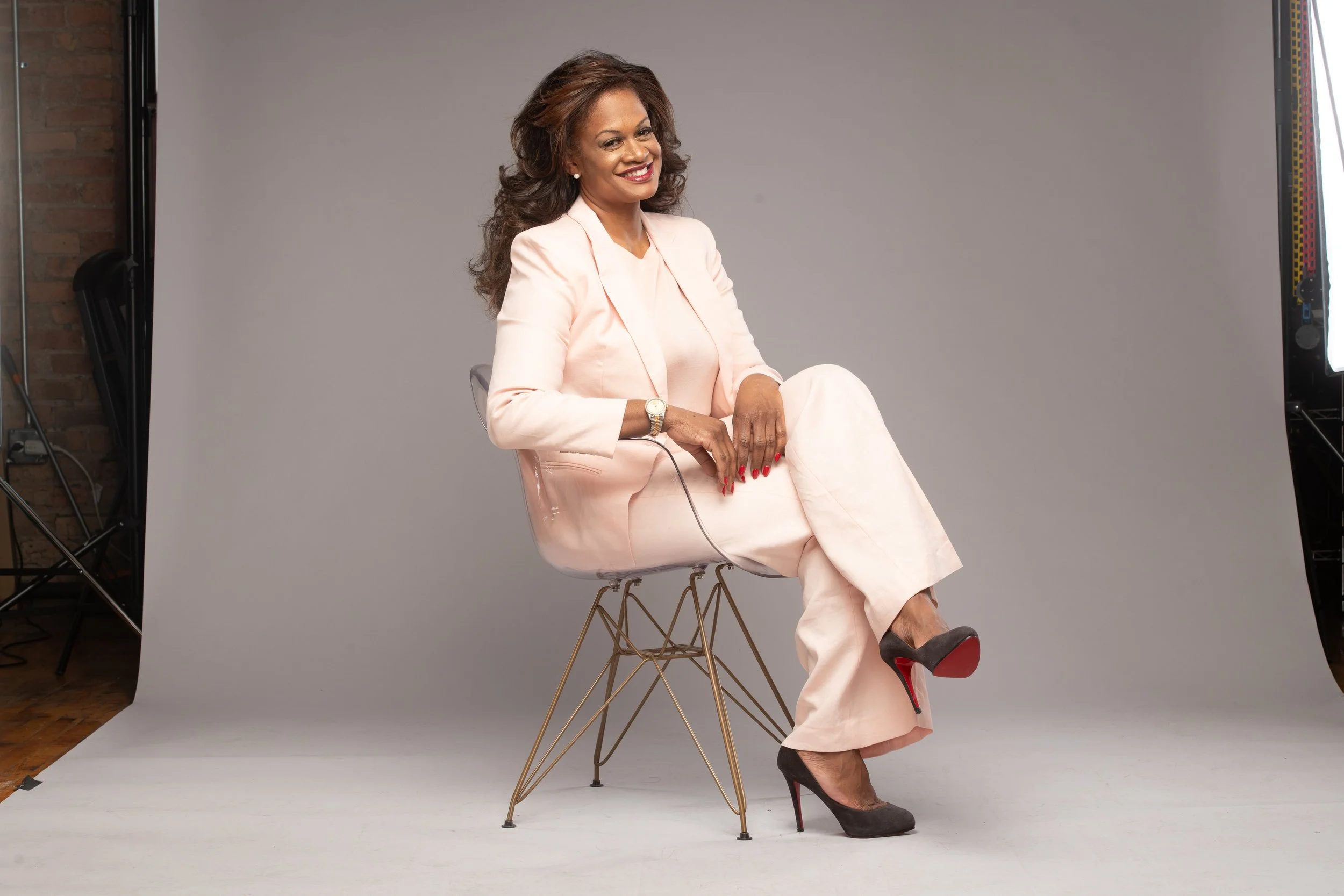
About the author
Kathryn Finney is one of the more honest voices in American business on how the next economy actually gets built, and who gets to build inside it. A two-time exited founder, early-stage investor in over 100 companies, founder of BUILD, digitalundivided, and TBF group, and bestselling author of Build the Damn Thing, she writes for entrepreneurs the rest of the market still underestimates.